National High-Tech Enterprise






 WhatsApp
 Pyrolysis Plant For Sale from TOP Manufacturer
National High-Tech Enterprise
Pyrolysis Plant For Sale from TOP Manufacturer
National High-Tech Enterprise

Waste Tire Pyrolysis Plant



 May 22, 2021
The waste recycling industry has always been very popular in the investment field. Among them, due to the high fuel oil recovery rate and high profit, the waste tire, scrap plastic, oil sludge pyrolysis plant projects have attracted more attention in recent years. According to customer feedback, we found that many customers want to know how the pyrolysis plant works. This article will explain the whole work process in detail.
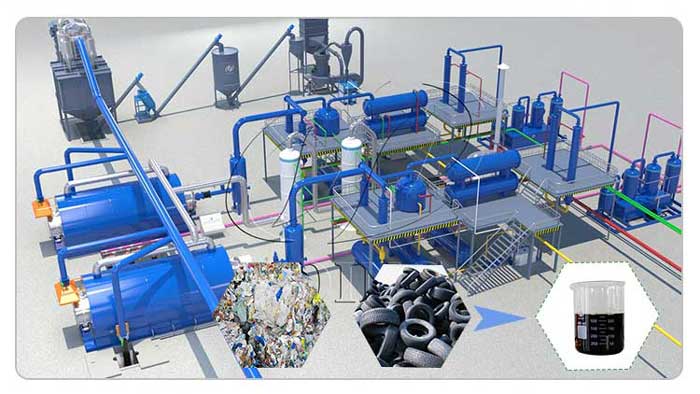 Doing pyrolysis plant 3D layout image
Actually, the complete pyrolysis plant work process involves more than just heating hydrocarbon waste feedstocks like tires, plastic or oil sludge; it is a highly engineered, multi-stage thermo-cracking reaction. This comprehensive guide outlines the end-to-end pyrolysis plant work process: from essential feedstock pre-treatment to a detailed operational cycle comparison of batch, semi-continuous, and fully continuous pyrolysis technologies.
A modern and efficient pyrolysis production line spans from raw material preparation to final emission control. As the complete introduction video shows, here is how pyrolysis plant works:
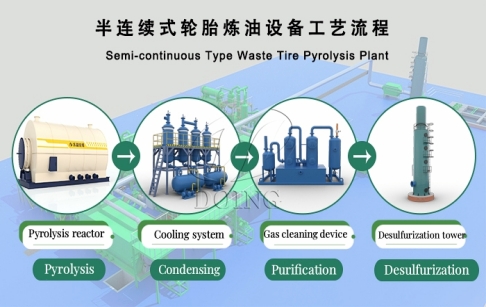
Thermal Pyrolysis Cracking Process Workflow: [Pre-treated Feedstock] ──> [Hermetic Feeding] ──> [Reactor Heating (200°C-380°C)]──>(Hydrocarbon Vapor)──> [Condensers] [Pyrolysis Fuel Oil Tank, Carbon Black Discharging System]──> [ Pyrolysis Products Storage/Sale]──>[Syn-gas Purification Recovery] ──> [Exhuast Gas Cleaning For Standard Emission]
Batch pyrolysis equipment does not mandate feedstock pretreatment. However, waste feedstock must undergo pretreatment before being fed into a continuous pyrolysis reactor:
Steel Wire Drawing: A wire drawing machine pulls out the thick steel wires from the waste tire beads to reduce reactor wear and facilitate recycling.
Shredding: A tire shredder crushes whole tires into small rubber shreds (typically 1-2 cm) or powder. For waste plastic materials, plastic crusher will be needed. This dramatically increases the heating contact area, resulting in a higher oil yield and faster processing.
Drying: If the feedstock like oil sludge has a high moisture content, it passes through a water seperation machine, as moisture reduces thermal efficiency.
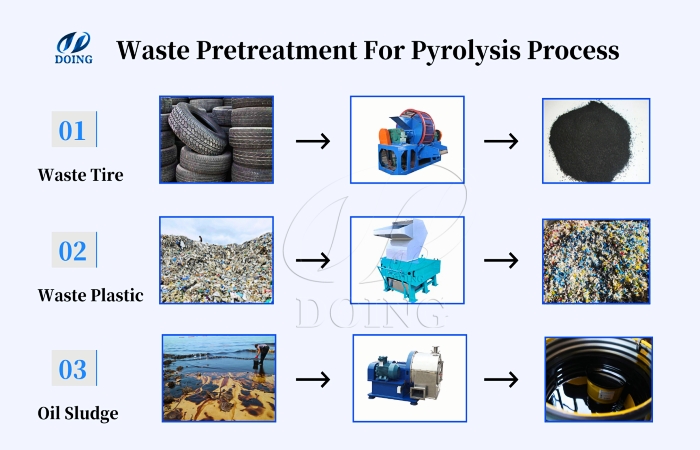 Pyrolysis feedstocks pretreatment machine
First, check all the motors of the pyrolysis plant to make sure all in good condition. And then the pre-treated waste feedstocks are delivered into the pyrolysis reactor.
For batch pyrolysis plants, this is done manually or via a hydraulic feeder, then close the inlet tightly.
For continuous pyrolysis plants, a specialized sealed screw conveyor continuously pushes materials in, ensuring an oxygen-free, airtight environment.
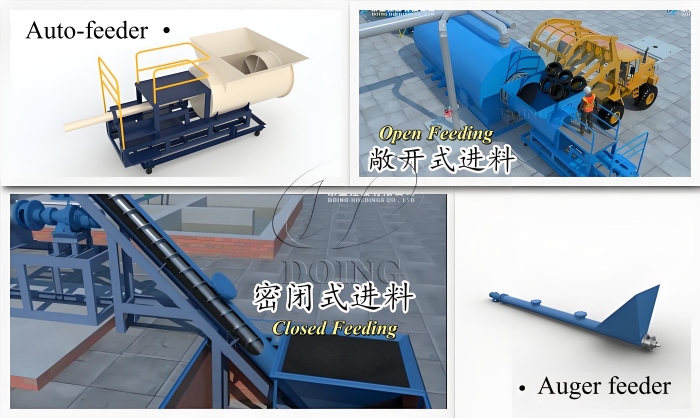 Feeding systems of pyrolysis plant
Turn on the heating devices to heat the pyrolysis reactor. The reactor is heated using fuel (coal, wood, natural gas, LPG, or fuel oil).
100°C–180°C: Total moisture evaporates, and the reactor preheats.
200°C–300°C: The rubber polymers begin to break down, and oil gas starts to generate.
280°C–450°C: This is the peak output period. The thermal cracking reaction stabilizes, yielding the maximum amount of oil gas.
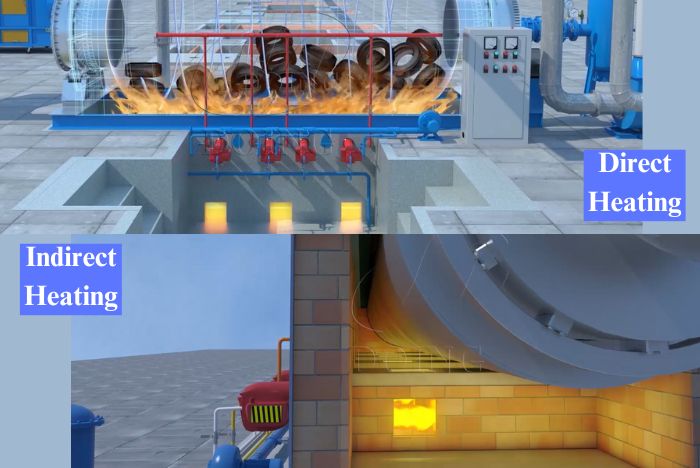 Thermal pyrolysis process
The oil gas leaves the reactor and passes into a buffer tank. The buffer tank slows down the gas flow while it's still at high temperature. From there, the gas moves into the high-efficiency cooling stage. You've got two options here: a compact cooling tank — a containerized unit packed with condenser tubes that doesn't take up much room; or a multi-stage cooling system, which includes two vertical condensers, an oil-water separator, two horizontal condensers, and two condensing towers.
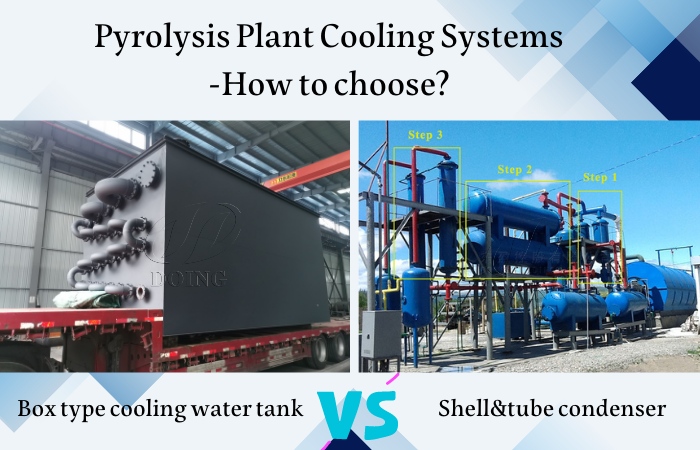 2 kinds of pyrolysis oil condensation systems
The non-condensable gas (also known as syngas) passes through a hydroseal (gas-water separator) and gas cleaning system for desulfurization and purification. It is then recycled back to the furnace as a clean heating fuel for the pyrolysis reactor itself, significantly lowering the plant's operational energy costs.
After the reaction is complete (or continuously during operation), the remaining solid residues are discharged safely.
Carbon Black: Discharged via an automatic cooled screw conveyor to prevent dust pollution.
Steel Wire: For batch plants processing whole tires, you should turn on pyrolysis stove cooling system, which is composed of induced draft fan, the reactor can be quickly cooled in 2-3 hours. Then steel wires are pulled out after the reactor cools down.
The exhaust gas generated from burning fuel is treated through a desulfurization dedusting tower, denitrification tower, water spray, and activated carbon adsorption. This ensures that the final emissions meet local environmental standards (such as EU or EPA standards), and the plant basically has no peculiar smell.
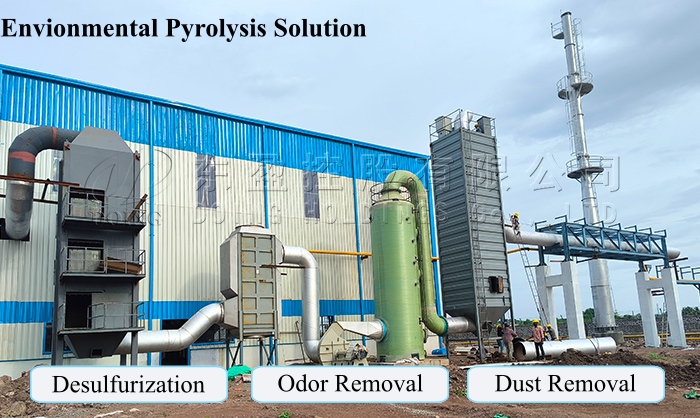 Environmental devices of standard pyrolysis plant
Doing Group has more than 15 years of experience in the pyrolysis plant industry. We now have three types of pyrolysis solutions: batch pyrolysis plant, semi-automatic pyrolysis machine, and new type fully continuous pyrolysis equipment. Choosing the right equipment depends heavily on your budget, labor costs, and processing capacity requirements. Below is the detailed operational and time-cycle comparison:
| Features & Parameters | Batch Pyrolysis Plant | Semi-Continuous Plant | Fully Continuous Pyrolysis Plant |
| Raw Material Requirement | Whole tires/plastic or large pieces (No pre-treatment required) | Shredded plastic/tires (Rubber shreds, 20-30mm), steel wires removed. | Rubber powder, plastic pieces or small shreds (<20mm), steel wires fully removed |
| Feeding & Discharging | Intermittent feeding; must cool down before discharging carbon black | Continuous feeding and high temperature discharging | Simultaneous & Continuous feeding and discharging at high temperatures |
| Automation Level | Low to Medium (Higher labor requirement) | Medium (PLC controlled components) | High (Fully automated PLC control, minimized labor) |
| Capacity Range | 1- 15 Tons / Day | 5 - 20 Tons / Day | 15 - 50+ Tons / Day |
| Operating Time / Cycle | About 18~24 hours per batch | 3 batches in 2 days 24-48 hours continuous running before a brief maintenance/cleaning shutdown | 24/7 Continuous Operation |
| Energy & Oil Efficiency | Higher fuel consumption due to repeated heating and cooling cycles | Moderate fuel savings | Highest efficiency. |
The pyrolysis process involves numerous technical complexities—from selecting the right pre-treatment shredding equipment to determining the optimal production cycle based on the local labor market, every step demands precision. Even minor deviations in moisture control or condensation capacity calculations can lead to thousands of dollars in losses due to pyrolysis machine operational inefficiency.
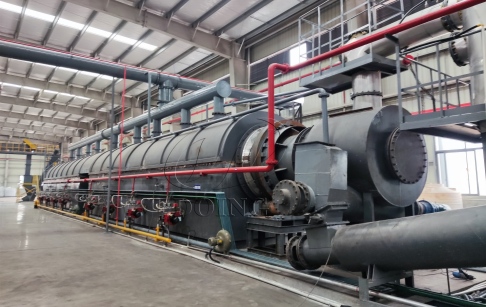
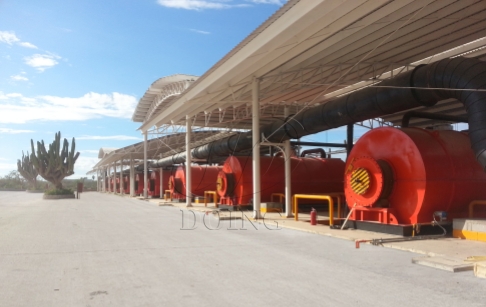
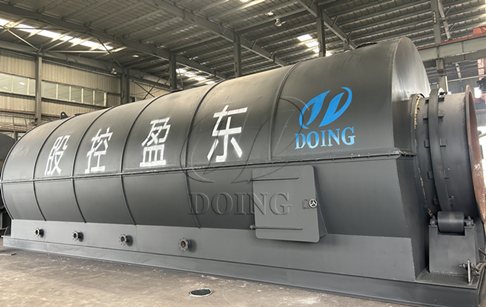
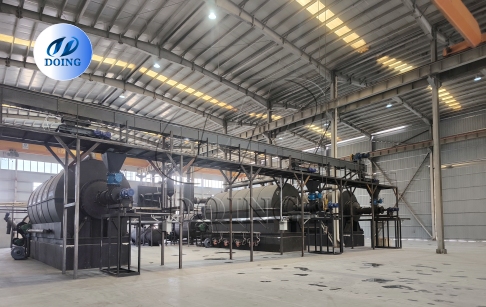
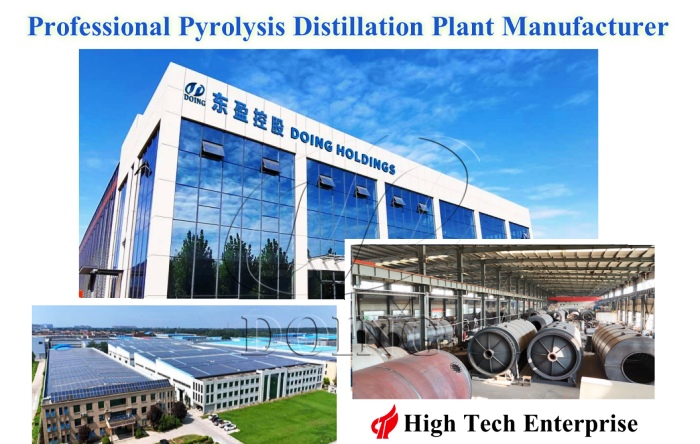 Pyrolysis plant manufacturer DOING Compan&Factory
As a global leader in advanced pyrolysis machines, Doing Group offers more than just equipment; we provide viable, eco-friendly pyrolysis solutions that meet EPA and EU standards, tailored specifically to the characteristics of your feedstock.
Customized Feedstock Pre-treatment Solutions: Engineered specifically for the properties of waste rubber tires, mixed plastics, or waste oil sludge to ensure maximum oil yield.
Tailored Pyrolysis Production Line Layouts: Expert consultation to help you select the ideal process—whether batch, semi-continuous, or 24-hour fully continuous production—based on your target Return on Investment (ROI).
Compliant Emission Solutions: Equipped with advanced exhaust gas purification and desulfurization systems to ensure you pass all local environmental inspections on the first attempt.
Please feel free to leave your contacts here and your privacy is protected. A competitive quotation will be provided according to your detailed requirement within one business day.